
The Secession Declarations
The New South & and "Frogs of Europe"

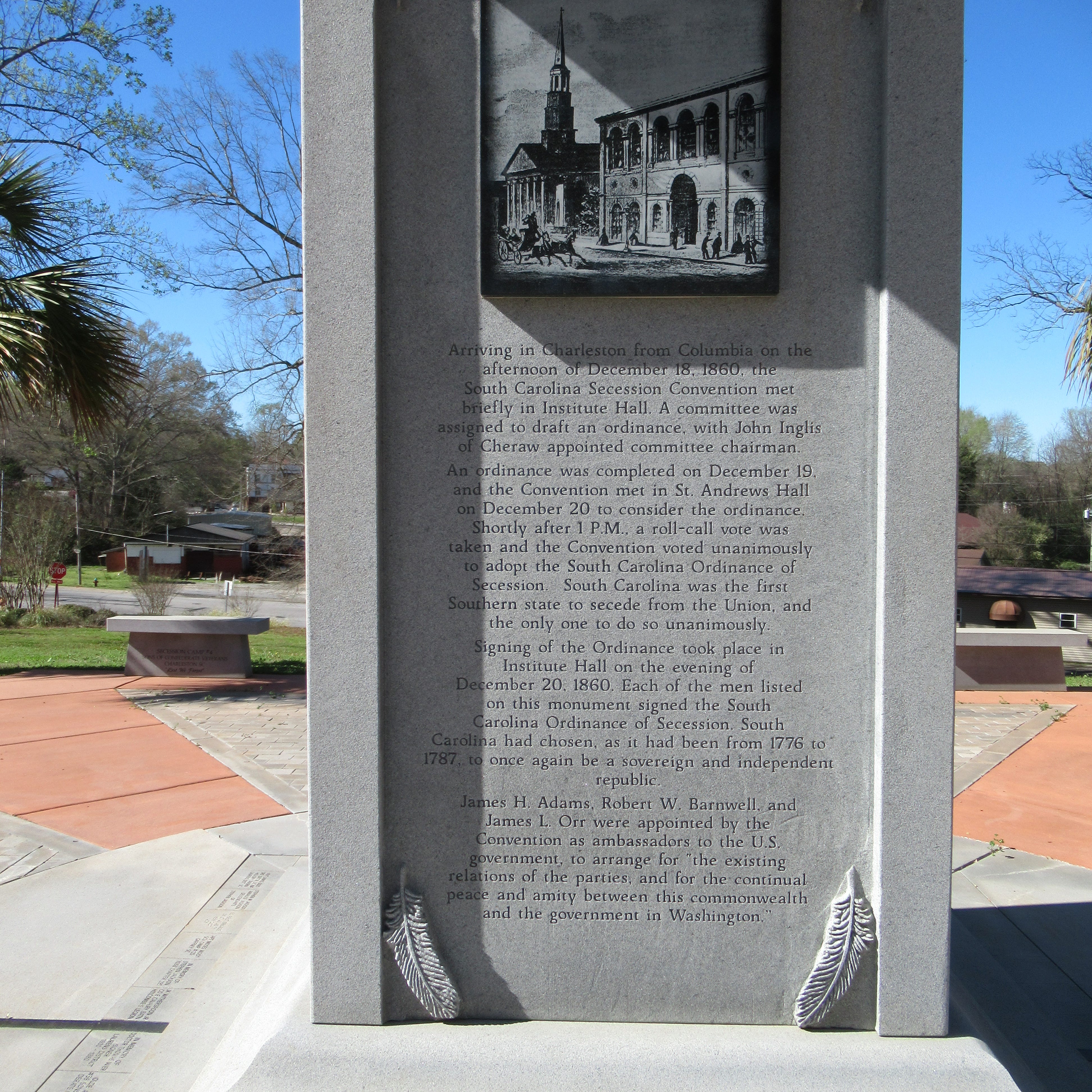
Many people, especially those wishing to support the South’s right to secede in 1860–61, have said that when 13 American colonies rebelled against Great Britain in 1776, it was an act of secession. Others say the two situations were different and the colonies’ revolt was a revolution. The war resulting from that colonial revolt is known as the American Revolution or the American War for Independence.
Four seceding Southern states published some form of declaration of their reasons for secession. These were South Carolina, Georgia, Mississippi, and Texas. Many academic allies of the Northern War to Prevent Southern Independence have recently taken up the cry that became these declarations have many references to slavery that they are proof that the war was all about slavery. First of all, however, there is a difference between the cause of the war and the causes of secession. The cause of the war was Lincoln’s call for 75,000 troops to invade the Southern States. This invasion immediately triggered more state secessions—Louisiana, Virginia, North Carolina, Tennessee, and Arkansas—in addition to protest from the governors of Kentucky and Missouri, and unrest in Maryland.
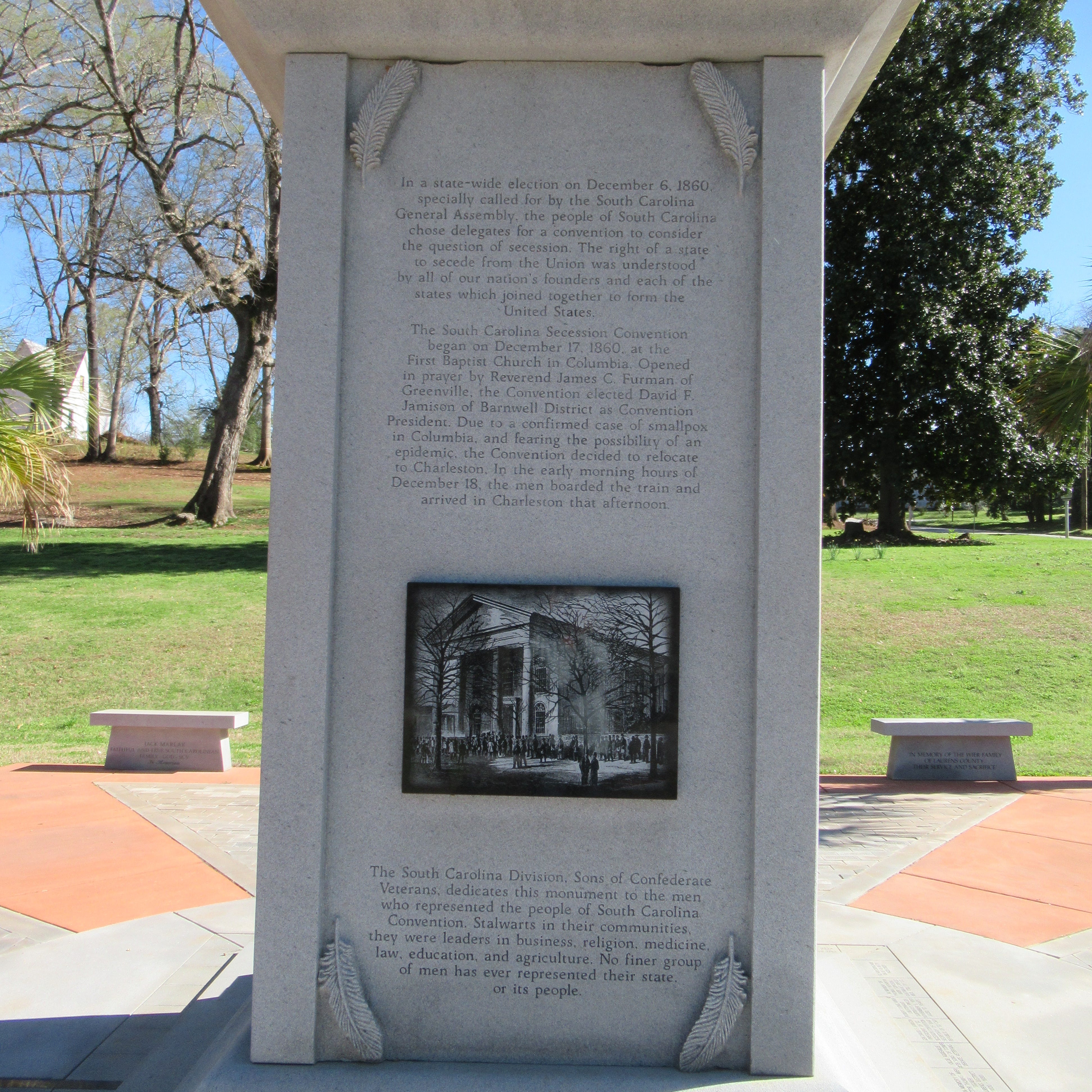
In addition, the substance of the secession declaration must be interpreted in their political/economic and constitutional contexts. The Northern Union h ad become an oppressive government dedicated to Northern regional dominance and almost exclusively Northern economic prosperity. States Rights were the primary bulwark against this Northern Nationalism. Many modern apologists for the Union cause to fail to recognize that these declarations, following South Carolina’s example, were building a legal case against the Northern breaches of the Constitution. Moreover, much of the language of these declarations was a protest against the constant inflammatory distortions and repeated attacks on the Southern honor by radical abolitionists in Congress and in the Northern press.
The Mississippi declaration included an admission of its economic dependence on slave labor. However, over-dramatizing this admission in accusatory terms fails to recognize a genuine dilemma. Many Southerns, probably the majority, would have gladly rid themselves of slavery. But how could it be done without destroying the economies of the major cotton producing states and severely damaging New York banking and shipping interests? Many also saw the necessity of preparing the slaves to compete in a free economy before emancipation. Many would have followed the British model of gradual emancipation, with compensation to slave owners.
What the secession declarations prove is that Southerns had strong reason to believe that their political rights and economic welfare were unsafe under Northern political dominance.

On June 15, 1882, the Reverand Robert L. Dabney delivered a discourse at the Annual Commencement of Hampden Sidney College in Virginia, entitled, “The New South.” Dabney was a Presbyterian theologian, seminary teacher, pastor, and author of numerous and diverse works on theology, philosophy, ethics, history, and political economy. Although frequently quoted by scholars, historians and theologians, he is unfortunately little-known today by the general public. He was, however, among the most prominent men of his era. His service in the Confederate as a Chaplin and for a time Stonewall Jackson’s Chief of Staff was by no means the limit of his great accomplishments. He was a scholar and social commentator of enormous breadth and penetrating insight. Much of Dabney’s writing is as relevant today as it was in the late 19th century. While he long dead, he yet speaks with near prophetic clarity on issues facing the nation and especially the South today. His words are particularly relevant to the present discussion of the heritage and future of the South. In our own times as in his, Southern Heritage is being constantly battered by politically correct propaganda. Today as never before, there are powerful organizations and ambitious power seekers who butter their political and economic bread by purveying historical ignorance and misinformation as a form of public righteous. Politicians, educators, businessmen, churchmen, and whole states are coward and blackmailed into accepting outrageous distortions of history. We suffer a time of too little knowledge and too little courage. Our own generations would do well to heed Dabney’s passionate and fiery exhortation on that day in 1882, a few paragraphs of which here are quoted.
“It behooves the New South, in dismissing the animosities or ennobling in its example. There are those pretending to belong to this company who exclaim: ‘Let us bury the past. Its issues are all antiquated, and of no more political significance. Let us forget the passions of the past. We are in a new world. Its new questions alone concerns us.’ I rejoin: Be sure that the former issues are dead before you can really bury them! There are issues that cannot die without the death of the people, of honor, their civilization, and their greatness. Take care that you do not bury too much, while burying the dead past: that you do not bury the inspiring memories of a Jackson and Lee, and their noble army of martyrs? Will you bury true history whose years are those of the God of Truth?”
“There is one point on which you insist too little, which is vital to the young citizens of the South. This is, that he shall not allow the dominate party to teach him a perverted history of the past contests. This is a mistake of which you are in imminent peril. With all the astute activity of their race, our conquerors strain every nerve to pre-occupy the ears of all America with a false version of affairs which suits the purposes of their usurpation. With a gigantic sweep of mendacity, this literature aims to falsify or misrepresent everything; the very facts of history, the principles of the former Constitution as admitted in the days of freedom by all statesmen of all parties; the very essential names of rights and virtues and vices. The whole sway of their commercial and political ascendancy is exerted to fill the South with this false literature. Its sheets come up, like the frogs of Europe, into our houses, our bed chambers, our very kneading troughs. Now, against this deluge of perversions I solemnly warn young men of the South, not for our sakes, but for their own. Even if the memory of the defeated had no rights, if historical truth had no prerogatives; if it were the same to you that the sires whose blood fills your veins, and whose names you bear, be written down as traitors by the pen of slanderous history, still it is essential to your own future that you shall learn the history of the past truly.”
Today as equaled only in the days of Reconstruction, there are those who would bury the truth and honor to gain peace and prosperity. The perversion of history that Dabney warned of in 1882 prevails as never before in our media, our educational institutions, the halls of government, in the giant business corporations with their vast economic power, and even in many of our churches. It is time we resurrected Dabney’s words and with them the courage to insist that our children and future generations learn history free of outrageous distortion and propaganda, that they learn the history of the past fully and truly.
